In the logistics and transportation industry, balancing legal compliance with operational efficiency is a major challenge.
Compliance with the Energy Conservation Act
Having an annual transport volume above a certain scale
"Specific shippers"」This includes the amount of energy used
Regular reporting is required.
Inefficiencies on site
In companies where outsourced transportation accounts for a large proportion,The cumbersome exchange of Excel spreadsheets with shipping companies has become commonplace.
The operation is dependent on individuals and inefficient.This is a major challenge.
Scope 3 calculation needs rising
In recent years, there has been a growing demand for the visualization of Scope 3 emissions in accordance with the GHG protocol.
In particular, addressing the calculation requirements for Category 4 (procurement transportation) and Category 9 (shipping transportation) is a matter of urgency.
Achieve centralized management of transportation emissions.
boost Logistics
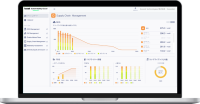
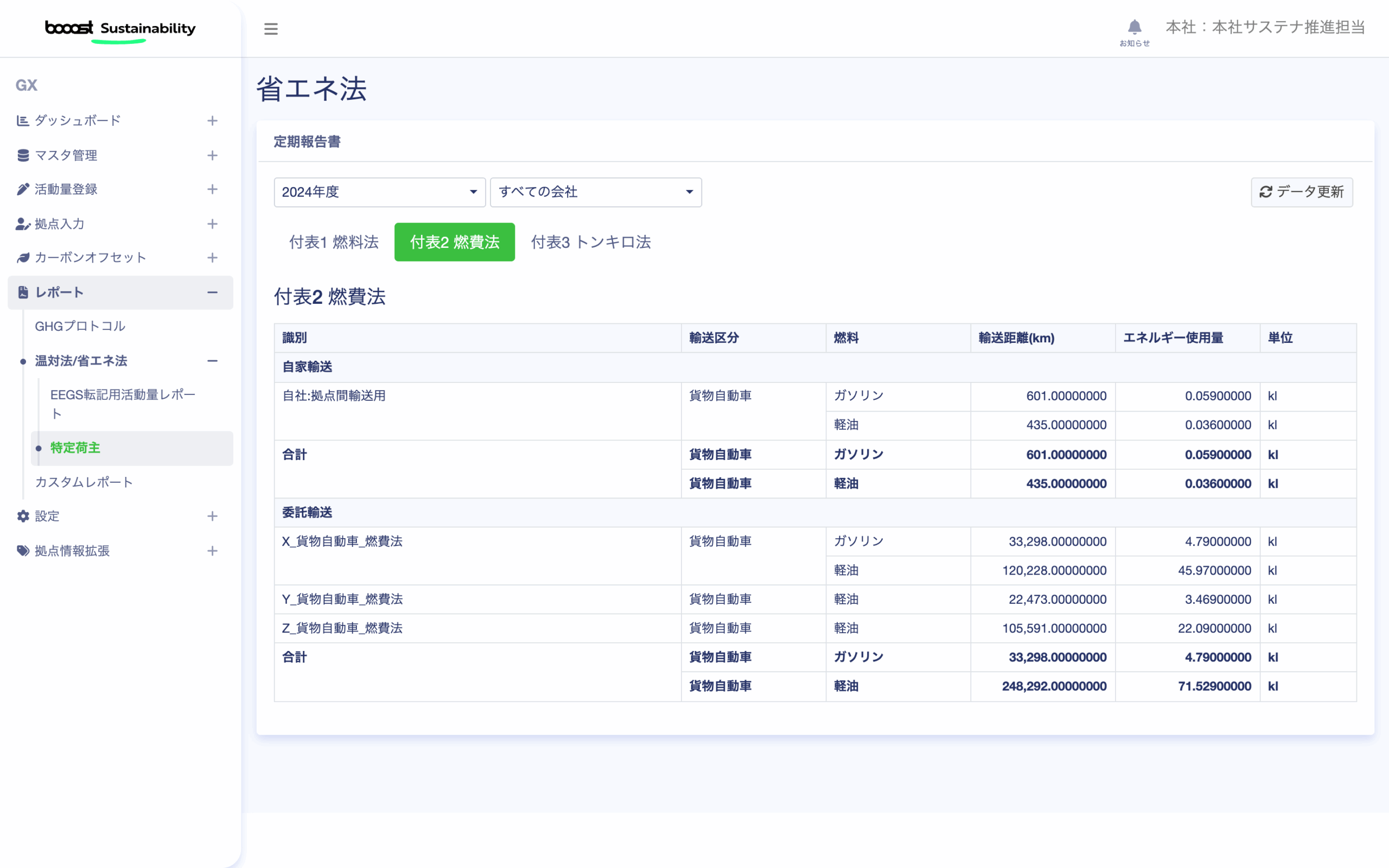
booost Logistics is a transportation emissions visualization module for the sustainability ERP system "booost Sustainability". Centralized management of in-house transport (Scope 1) and outsourced transport (Scope 3).Can do it,Automatic output of reports required under the Energy Conservation Act.It also supports this.
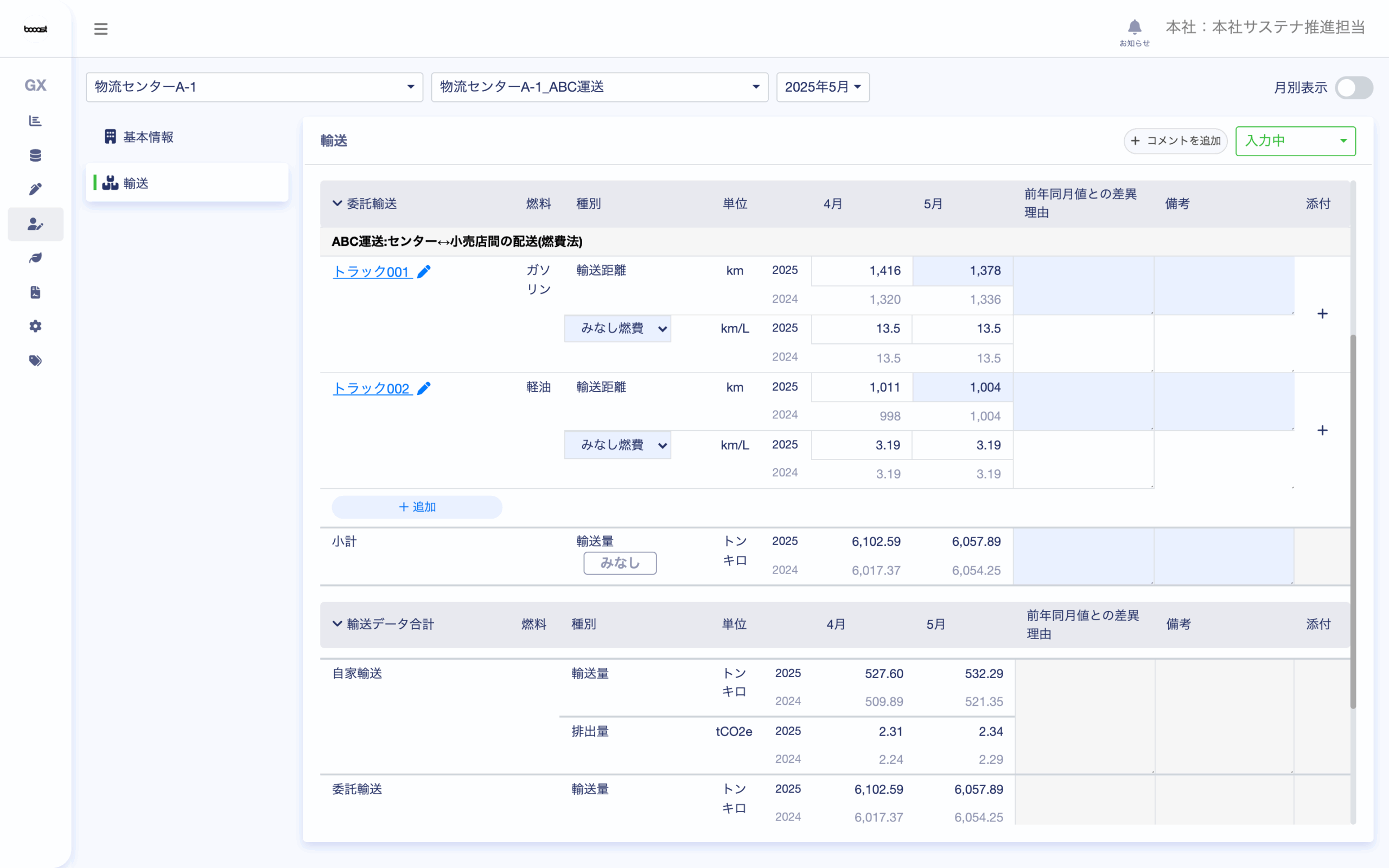
Trucks, ships, railways, airplanes, etc.Activity data input for each mode of transportor,Fuel Law, Fuel Consumption Law, Improved Ton-Kilometer Method, Conventional Ton-Kilometer MethodThis enables calculations using various calculation methods.
Pickup function
Streamlining compliance with laws and regulations
This streamlines the reporting process under the Energy Conservation Act for designated shippers, significantly reducing the workload.
Improved data accuracy
By incorporating an approval flow into the data collection process, we eliminate reliance on individual expertise and improve accuracy.
Easier determination of applicability
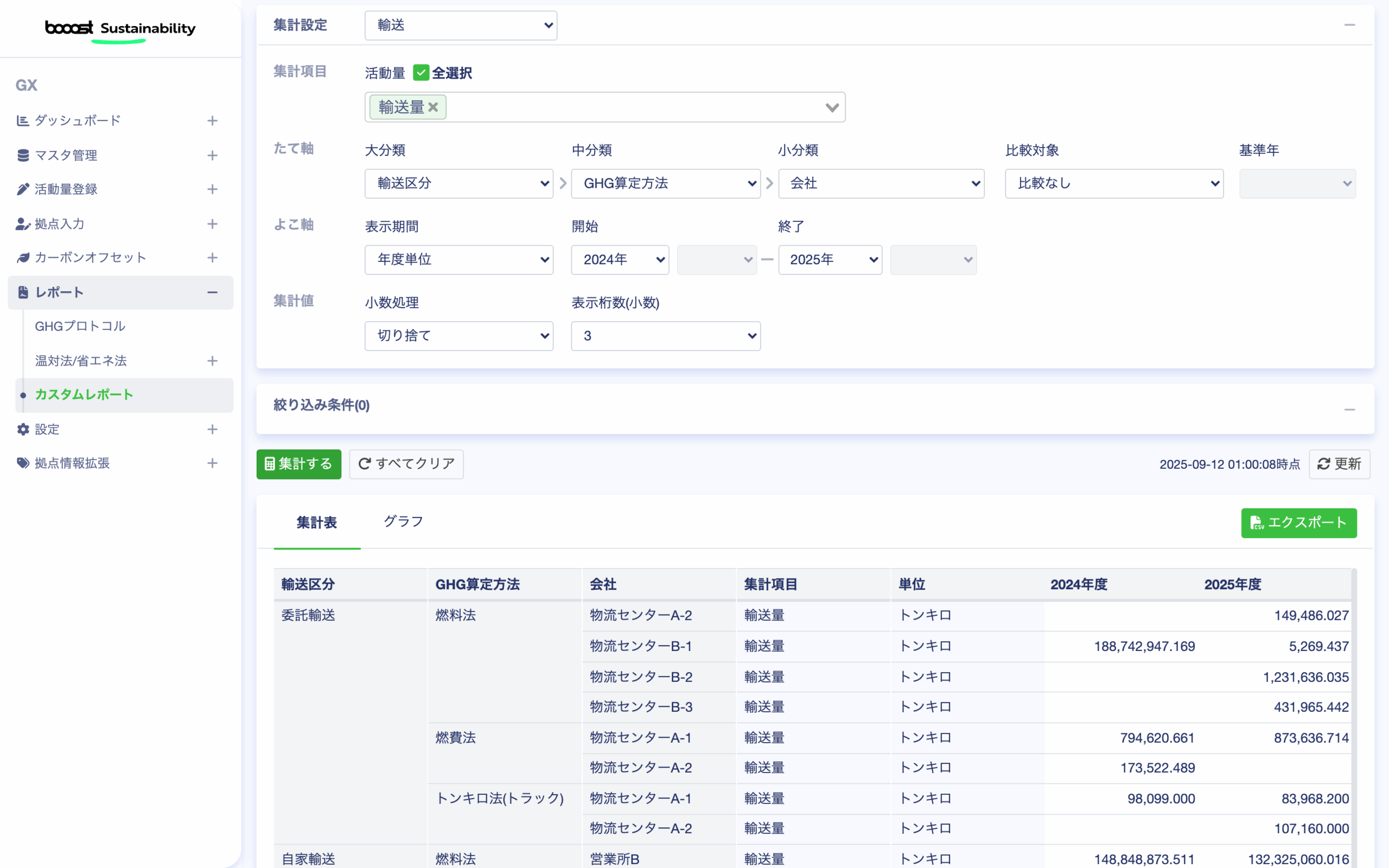
Transportation volume can be aggregated on a company-by-company basis, making it easy to determine whether a company qualifies as a specific shipper.
Promoting emission reductions
Promoting emission reductions: Visualizing emissions by logistics base, identifying reduction bottlenecks, and supporting policy development.
The activity level of contracted transportation companies can be recorded and aggregated on a vehicle-by-vehicle basis.
Supports various calculation methods including the fuel method, fuel consumption method, and ton-kilometer method.
Supports various modes of transport including trucks, ships, rail, and air.
Output is possible in a format optimized for the Energy Conservation Law, the Global Warming Countermeasures Law, and the Fluorocarbon Law Electronic Reporting System (EEGS).
In addition to emissions, the "energy consumption" required by specific shippers.」 It also supports the calculation of
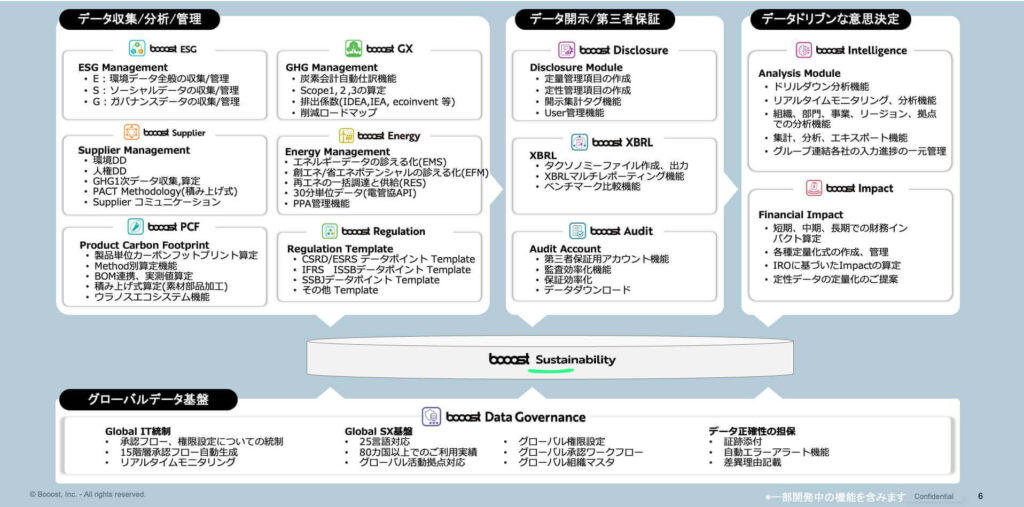
We standardize best practices for "non-financial information management" in global companies. Flexible implementation tailored to each company's objectives, such as compliance with CSRD and ISSB, and enhancing corporate value, enables the streamlining and optimization of sustainability-related operations.
We offer industry-specific solution packages that combine the necessary modules.
Module List
Sustainability reporting and sustainability-related financial reporting "Sustainability ERP Function Set" covering all core business operations of the group.